
Innocent Abroad

It was about 3:30 in the morning when I finally caught a public bus out of the Narita airport in the rain on July 4, 1978. I was twenty-two years old, and I had arrived in Japan with a letter of introduction to an unknown carpenter, tucked safely into my bag. The only characters I could make out on the page were “M”, “I”, and “T” because Shun K., my studio teacher in grad school – who, about a year later, snuck into my bedroom when I was staying at his house in Tokyo, and his wife and daughter were in the other rooms, and he had misread my intentions -- had kindly authored this written introduction in Japanese to let the person to whom it might concern know that I came from a reputable place. Formal introductions were considered essential in Japan, a country that was still clinging to some, though not all, of its ancient traditions. It helped that the farther you got from Cambridge, the smarter you looked if someone found out that you attended MIT. “Ah, Atama gaii desu ka?” they would ask me later, although it was more a statement than a question. “Your mind is good. Isn’t it?”
My mind’s potential might have been worthy, but it wasn’t all that good yet. Exhibit A: I had miscalculated and arrived in Japan in the middle of the night without a place to stay. I did have the name and telephone number of a friend of a friend who lived in Tokyo, and I had just enough money to pay for a return flight to the states.
The year before this trip, I had gotten into architecture school through the strength of my art portfolio from four undergraduate years in Boston University’s Fine Arts Department, a happily sympatico interview, and unadulterated stubbornness. I hated filling out applications, and as it was with undergrad, I put all of my eggs into this one basket. Also as it was for me with BU, MIT was the only school to which I had applied, figuring that I would find something else to do if this didn’t work out. But then, I was stuck on the waitlist as the MIT architecture program had already filled the “art student” entry quota. It was at that point that I made it my life’s purpose to get in. I repeatedly barraged them with work as I completed it, such as articles I had published that helped get a building onto the National Historic Register, and an additional letter of recommendation from one of the first female architects in America, Sally Harkness, who I had met on a tour of women in architecture and who wanted to hire me to work in her firm. I knocked so hard on MIT’s door that they finally let me in. With a ”deficit” in math that I had to fill, and even despite the fact that I hadn’t taken any written tests in four years, they took a chance on me. Shockingly, the school that ran on numbers like a car runs on gas, didn’t require Graduate Record Exam results, nor care at all about my numbers.
I was the one who recognized my real deficit, and it was that I needed to learn how things are built. I did not want to be a paper-only designer. I was determined to go out into the world and learn structures and building methods, hands-on. I decided to start my education in construction aligned with the beginning of the history of architecture, which meant that I was either going to work in masonry (block upon block) or with wood (post and lintel), as these were the earliest building types (with a few non-Western exceptions). I loved wood. I had gone into the study of architecture partially because of my affection for that material. So, I narrowed down the potential regions of great woodworking to Vermont, Oregon, Scandinavia, Northern Italy, and Japan, as I had learned that these were the best places in the world to practice carpentry. At the time, I loved Japanese food, film, Toshiro Mifune, and literature, and I set my sights on that remote and, to my mind exotic, island in Asia.
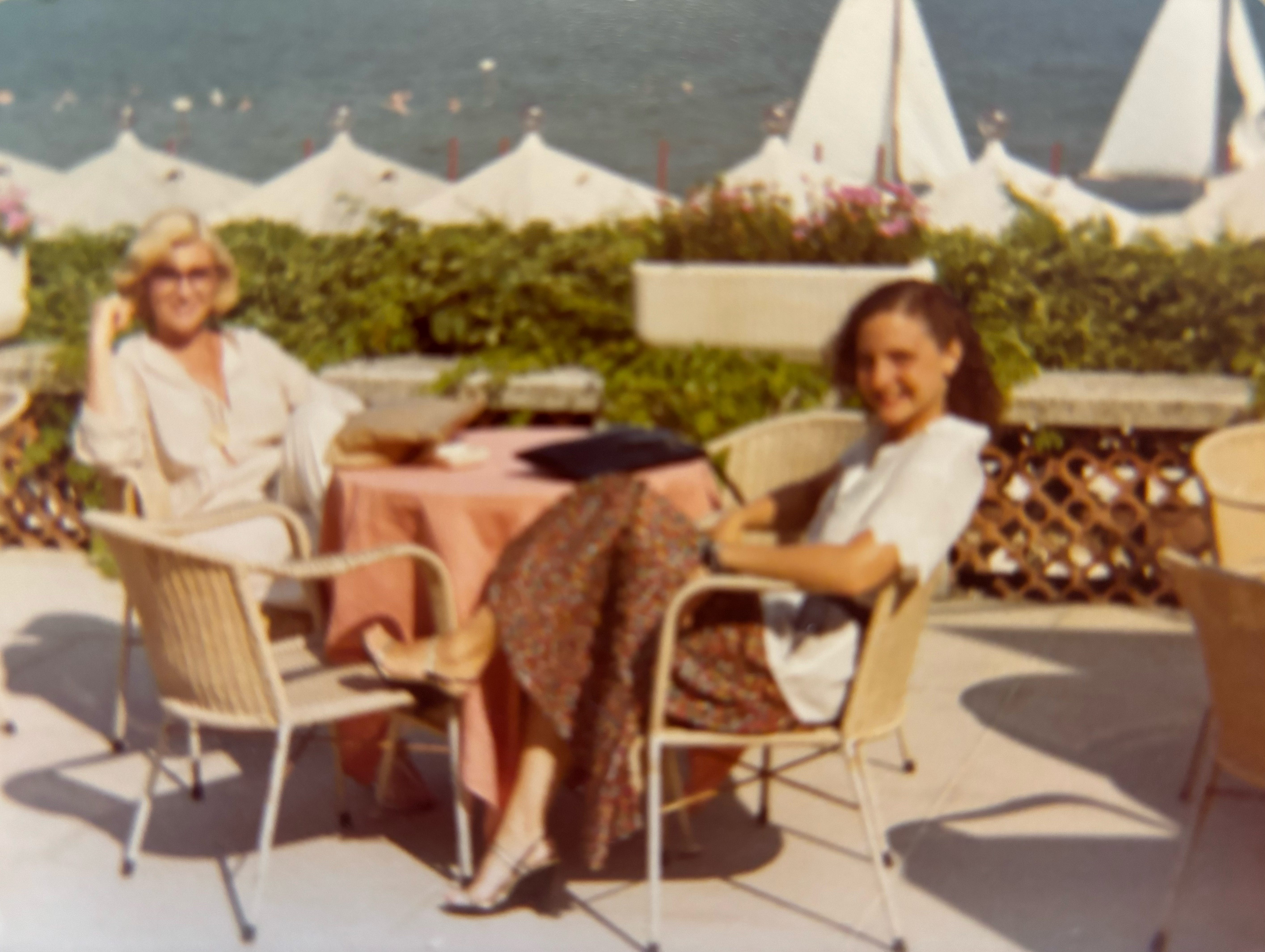
Japan was an eighteen-hour plane ride from the east coast of the United States. But, I was undeterred. I had built confidence through earlier experience traveling alone. One summer, when I was nineteen, I had taken myself on a solo trip. I carried a red Kelty backpack around Europe on a personal, five-dollar-a-day, self-designed, two-and-a-half-month adventure.
That trip started in France, where I stayed with a friend in her tiny apartment in Paris, directly over the Shakespeare and Company bookstore where I learned that light switches on a timer at the top and bottom of the stairwell may or may not remain on for the length of time it would take to climb to her floor, and was taught the phrase, “Juste derrière la porte” by a Moroccan friend of hers who thought it was funny to have young female foreigners say the word “backside”.
From France, I traveled by train to Spain, where I ran into an acquaintance, another American, a friend of a friend who was also traveling alone. Her fashion interpretation as an urban liberal, with black hair, black dress resting halfway between her black stocking-clad knees and clunky black shoes nearly camouflaged her as a Spanish widow. She was standing in front of Hieronymus Bosch’s “Garden of Earthly Delights” at the Prado in Madrid. Actually, I was looking at the Bosch and she was standing next to me, in front of a painting of St. Catherine, which I found magically coincidental as her name was Katherine. You know, the kind of tiny coincidence “of Fate!” that rocks your world when you are in your early twenties. Katherine and I decided to travel together to Valencia by train, a multi-hour ride during which a father seated in the same train compartment was delighted to show us that he knew English. “One, Two, Three…” he began, slowly counting on his fingers. He successfully made it to “Eight”, but then he would get stumped, laugh good naturedly at himself, and start again, over and over for what became an interminable train ride. Once we got to our destination, Katherine was vaguely sick. We ate oranges in the dark gray train station, and I decided that the station was all I needed to see of Valencia. I turned around, got back on the train, and headed north. In Barcelona, I was accidentally let, by a tenant, into her apartment at the top of Gaudi’s Casa Batlló. And then I had a romance with a cute boy named Juan Carlos, when I spent ten days in Sitges by the sea.
Meanwhile, my parents used the pretense of a business trip to check up on me, although they had no particular business in Europe. There was no internet at the time, and phone calls other than emergencies were not in my budget. So, they met me again in Paris. There, they stayed at the Plaza Atheneé where a mini-melon with a French name cost fifteen dollars (equivalent to about one hundred and five dollars today), and where a group of Arabian women perambulated the interior hallways of the hotel, while their male companions went out on the town. My folks took me to five-star restaurants with a dessert that had a light basket of hardened caramel floating above a custard tart, all resembling a tiny, Victorian birdcage.
I left my parents and traveled to Venice where we were to meet again at the Danielli Hotel near the Doge’s Palace on the Grand Canal, and I arrived before them, standing out with my bright red backpack like an Arctic explorer on a glacier. The tall concierge in a white uniform asked if I wanted a private tour of the dazzling king’s suite before my folks arrived, and then he tried to kiss me in a tiny hidden elevator behind the painted wall paneling. I rebuffed him. Once my parents did arrive, they took me to the Lido to sunbathe on the beach and, there, a forty-year-old American neurosurgeon, in the full light of my parent’s company and with their surprisingly implicit approval, tried to pick me up.
After having treated me to the kind of life they hoped I would become accustomed, and also satisfied that I was alive, my folks returned to the states and I proceeded to travel to other parts of Italy.
It was a hot summer, and on someone’s advice, I took the train to a beach on the Adriatic Sea which sounded so romantic. There, big, sunburned people wore tiny black bathing suits, and cigarette packages bumped against my shins in the shallow, sluggish waves that seemed to extend outward forever. I did not stay there long.
I headed north to Amsterdam where I had another brief romance, with a boy named Yopi, ate a lot of fresh dairy foods, and was giving an inside tour of a “dance club” where naked women standing on the bar acrobatically picked up bills without using their hands. From there, I took the ferry across the Hook of Holland, and strained, but never succeeded in understanding Scottish. This was about nine weeks into my journey, and I was running out of money. So, I stayed in a Tent City (more or less, a homeless encampment) for two nights, anxious and stuffing my emotions with a full bag of Oreo cookies, a pint of vanilla ice cream, and a Snickers bar.
So, a few years after that trip, it was not a big stretch for me to imagine living in Japan, even though I was headed there to seek a job in an occupation for which I had no experience, where I didn’t know the language, and in a country where no other woman had ever done that line of work. I knew that Japan was safe. The worst possible act that might be committed against me was pickpocketing. Oh, and misogyny. But I didn’t account for that. It was a subject I simply preferred to ignore, as though not considering it made it nonexistent. This had, after all, been true in my experience – if, for example, getting into a high-profile school with a 7-to-1, male-to-female ratio was any indication. I taught myself a few words and sentences in Japanese on the flight as I winged my way to my self-made gap year of study.
I also had a secret weapon, or so I thought. The same teacher who penned my introductory letter also taught me one sentence. This, he said, would help me if I found myself lost in Tokyo. “Kobun wa doku desu ka?” “Where is the police box?” Reportedly, there was a police box at every intersection in the capital city.
So, it was after 2:30 AM that I was standing in the nearly empty airport at a pay phone, trying to understand kanji and romanji text on the instructions, keeping my suitcase in touch with my body, and calling the number of a friend’s friend, over and over, with no answer. I decided to take the bus into the city and walk until light, if that were necessary. I was lucky that the protests that had taken place at the airport a few weeks prior were no longer happening. Protesting what, wages? I was not sure. I was vaguely worried, but not that inquisitive about it. The bus drove to a transit hub in a quiet alley in Tokyo where it unceremoniously released me and my suitcase out into the dark.
Two men were laying down under the only streetlight. One man, lit from behind, stood up and walked with a limp toward me as I frantically looked through my pocket-sized phrase book as if it were a talisman against an evil spirit. As he approached, I could see that he was disheveled but for some reason, I did not sense that he was a danger to me. Anyway, I had no defenses. I asked him “Kobun wa, doku desu ka?” He kept coming. I asked again. He got close enough to look at the little phrase book that I was holding open to a page where he pointed to a word in Japanese. “Careful!” it read. And he gestured to the other guy who had not yet arisen from his street slumber. Ok, I thought, and I laughed with some relief and recognition of the ridiculousness of it all. Then the guy grabbed the handle of my suitcase, and I grabbed it too, and, side by side, he proceeded to lead me and the bag out of the alley. We got to a large and surprisingly busy intersection of traffic, considering that it was the middle of the night. And we kept walking. The two of us shared the effort to pull the two-wheeler behind.
Eventually, he deposited me inside a police station! It was a small room with light green walls and fluorescent lights. The man bowed to me, and I knew enough to say “Thank You” in Japanese before he left. But then, the police didn’t know what to make of me or of the strange letter describing a young, foreign woman who had no experience but wanted to work as a carpenter. I had the telephone number of my friend’s friend on the small scrap of paper, and I handed that to the man at the desk as well. He gestured for me to please sit down, and I perched on a ubiquitous, municipal version of the molded plastic Eames side chair, in between a man with a bloody nose and a woman with ripped tights, runny makeup, and hair that looked as though she had been in a fight. To my benefit and relief, my seatmates, who seemed lost to their own worlds, politely ignored me.
After a while, the policeman arrived with a guest; a very pale, tall, composed, red-headed British man whose name –- Michael -- matched the name on the scrap of paper I had handed over. Michael was working and living in the Shinjuku section of the city. He sprung me from the station, welcomed me into his apartment, made up a futon so that I could sleep, and took me out the next day for my first Japanese breakfast of comically thick, white Wonderbread toast and a tiny, spotted quail egg, and helped me to get my bearings in this new to me, strange land. As it turned out, this was just the first of many times when people in Japan went well out of their way to help me, the guileless, brave American girl with the big dreams.